Serious Game or E-Learning: A Strategic Choice, Not Just a Technological One
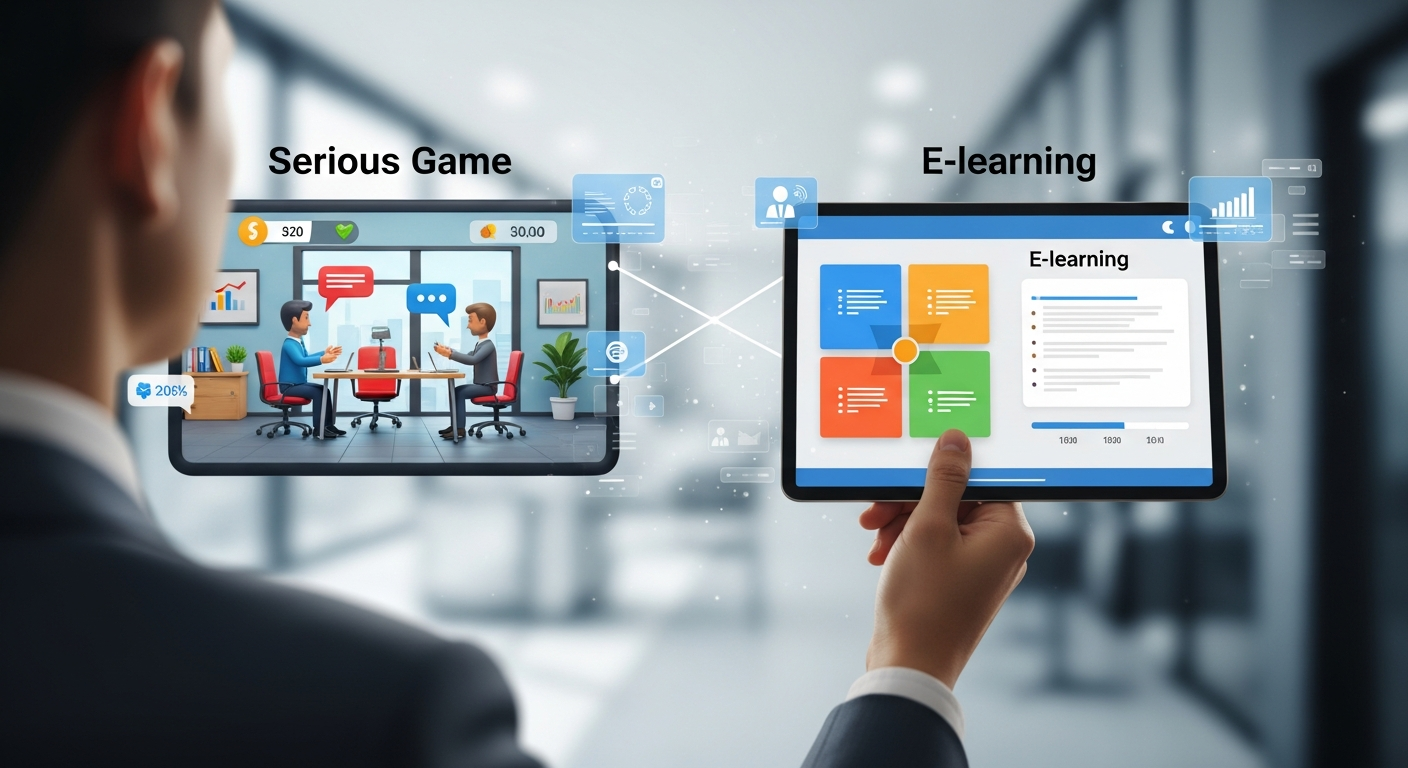
For a training manager, an HR manager, or an instructional designer, the real challenge today is no longer to “go digital.” It’s choosing, from the multitude of available formats, those that will actually deliver a measurable impact on skills and behaviors. The issue of serious game e-learning then becomes central to building an effective strategy.
In many organizations, the same questions keep coming up in training committees or meetings with the business lines:
- “Should we invest in a serious game or stick with a more traditional e-learning module?”
- “Isn’t a serious game too expensive compared to a simple SCORM?”
- “How can we prove that it really improves on-the-job performance?”
This article was designed to respond precisely to these questions, from the point of view of those who manage training systems. The goal is not to settle the matter in theory, but to provide a clear, concrete decision framework for your projects.
We will therefore:
- Clarify the differences between serious games and traditional e-learning, focusing on what this changes for your learning objectives and HR indicators
- Compare their advantages and limitations in terms of engagement, knowledge transfer, costs, tracking, and operational performance
- Show how to intelligently combine them in blended learning paths, and how a no-code authoring tool like VTS Editor lets you produce both without relying on developers
Serious Game vs E-Learning: Understand the Differences to Decide
Serious Game E-Learning: A Behavior Simulator to Reduce Risk
For a training decision-maker, a serious game is not primarily a “video game.” It’s a simulator of job-related situations in which your employees can practice without risk, try multiple approaches, see the consequences of their choices, and receive immediate feedback.
In concrete terms, a serious game is particularly relevant when you need to work on skills that are not just about “knowing,” but about “knowing how to do” and especially “knowing how to behave.” This is the case, for example, when you want to:
- Prepare managers for sensitive interviews (corrective feedback, difficult announcements, conflict management)
- Put sales teams in situations facing difficult customers, objections, tense negotiations
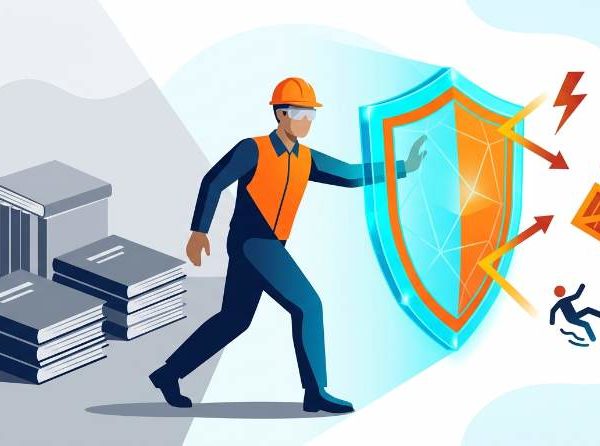
- Raise awareness about safety or compliance by showing the real impact of poor decisions
Building a Serious Game E-Learning Module with VTS Editor
In VTS Editor, this type of learning experience is created by visually assembling blocks:
- The Speak block to orchestrate the dialogue between the characters and the learner
- The Emotion and Character Animation blocks to display a credible non-verbal reaction after an awkward statement or, conversely, a well-formulated one
- The Sentence Choices block to offer several possible answers with different impacts on the score or the continuation of the scenario
- The Score and Check Score blocks to assess targeted skills such as active listening, assertiveness, or compliance with procedures
This combination makes it possible to reproduce what your employees really experience, but in a completely safe environment. A manager can fail an interview several times, test different attitudes, see the virtual reaction of their employee, before facing a real person.
From an HR perspective, this changes everything: you’re no longer just training for “the right theory,” you are directly reducing business risk (poorly managed conflicts, lost customers, safety incidents) by training decision-making in realistic situations. Numerous studies also show that serious games improve retention and the transfer of skills to the field (see for example the work summarized by the International Journal of Technologies in Higher Education).
Traditional E-Learning: A Powerful Tool for Standardization and Dissemination
The “classic” e-learning module remains the backbone of most digital learning systems, and for very good reasons. It’s the ideal format when your priority is to disseminate a common framework on a large scale and to track it in detail.
In practice, an e-learning module structured into “content + activity” sequences allows you to:
- Harmonize messages on a new process, a tool, a product range, or a regulation
- Ensure that every employee has taken note of the minimum mandatory information
- Feed your LMS or HR reports with scores, completion rates, and connection times
Building an Effective E-Learning Module with VTS Editor
In VTS Editor, you can build this type of module very efficiently by combining:
- The Slideshow block to clearly present a procedure, a risk map, or a new customer journey
- The Video and Media in Scene blocks to concretely illustrate a specific task, an application screen, or a real case
- The Quiz, True/False, Matching, or Drag & Drop blocks to check understanding of key concepts
- The Progression block to finely manage the completion and success status reported in SCORM
For a training manager, this e-learning provides a coverage guarantee: you can demonstrate to your executive team or an auditor that the majority of the target population has completed the module and that the average score is satisfactory. This is not enough to deeply transform behaviors, but it is indispensable whenever there is a regulatory, quality, or brand-related challenge.
To delve deeper into best practices for designing these modules, you can also rely on our white paper Immersive Learning – The Missing Link in Training.
Why Pitting Serious Games Against E-Learning Will Reduce Your Effectiveness
At the scale of an annual training plan, pitting serious games against e-learning is often counterproductive. One does not cancel out the other; they address different moments in the learning journey.
For example, in many projects, we see:
- “All e-learning” systems where the theory is well communicated, but where managers notice, six months later, that practices haven’t changed
- “100% serious game” projects that are exciting but leave out some mandatory content or regulatory elements that are difficult to incorporate into a storyline
The most effective combination, from both a pedagogical and ROI standpoint, is often the following:
- An e-learning module to establish the basics, provide the framework, the vocabulary, and the key steps
- A serious game or a series of interactive scenarios to confront the learner with concrete cases, with targeted feedback on their choices
- A debrief (in person, virtual classroom, or asynchronous) to connect what was experienced in the module to the teams’ real situations
With a unified tool like VTS Editor, you can even integrate these components into a single experience: a very structured part at the beginning, then increasingly open game scenarios, with no technical break either for the user or for the LMS. This is the kind of approach detailed in our gamified e-learning modules solutions.
Advantages and Limitations: The Impact of Serious Game E-Learning on Your KPIs
Engagement and Motivation: The Power of Games to Bring Learners Back
One of the most frequent pain points reported by training managers is disengagement with certain modules: learners who click “next” without reading, who leave an e-learning module running in the background while doing something else, who only do the bare minimum to be “in the green” in the LMS.
The serious game addresses this problem precisely by changing the learning contract: the learner is no longer a spectator but an actor who has to make decisions. This change translates very concretely into the numbers when:
- Learners have the opportunity to replay a scenario to improve their score
- Badges or levels are awarded using the Badge and Score blocks to mark mastery milestones
- Scenarios are branched, making each run slightly different, thanks to the Random block or conditions based on flags
For example, a serious game on customer relations in VTS Editor can offer several customer profiles generated randomly, each with their own temperament. The learner quickly realizes that they can’t “play on autopilot”: they must analyze the situation, adapt their message, and try different paths. Research on game-based learning shows that this type of mechanic significantly increases motivation and time on task (see for example Wouters et al., Computers & Education).
For an HR manager, this means you’re no longer limited to an imposed “connection time”: you’re creating the conditions for the learner to actively seek improvement, which is a much more meaningful indicator of real ownership.
Knowledge Transfer and Compliance: The Natural Playing Field of E-Learning
Conversely, when your main objective is to ensure your employees are able to recall the key points of a new policy, describe how a tool works, or know regulatory thresholds, using a serious game is not always relevant. You risk spending too much design time on game mechanics where a well-structured content and a few quizzes would be enough.
A well-designed e-learning module can perfectly:
- Segment information into small, easy-to-digest sequences
- Visually highlight critical elements (diagrams, icons, videos)
- Check understanding through targeted questions, or even through blocks like Slider or Numeric Field for specific values
In VTS Editor, the combined use of the Message, Slideshow, Video, and Quiz blocks lets you create compact and effective modules that appeal to both operational staff and auditors. By adding the True/False or Matching block, you can quickly validate learning at the end of each chapter.
From a reporting perspective, the fact that these experiences can be exported in SCORM, with an aggregated score or a success status controlled by the Progression block, meets your traceability obligations. You can easily justify to compliance or risk management that the training has been deployed and completed. To go further in structuring these learning paths, you can rely on our white paper The Benefits of Digital Learning Simulation.
Costs, Timelines, and Industrialization: Debunking the “Serious Game Is Too Expensive” Myth
This is often where the debate becomes tense: “We don’t have the budget or the time to develop a serious game.” This objection was entirely valid when a serious game systematically involved custom development, with lines of code and hand-crafted graphics.
Things have radically changed with the emergence of no-code authoring tools like VTS Editor. Today, the question is no longer “do we have a development studio?” but rather “do we have instructional designers capable of scripting situations?”
Here are a few concrete elements to consider:
- Most historically “expensive” mechanics (score management, badge display, branching, randomness, sceneries, animated characters) are now built-in as blocks that can be used in just a few clicks
- Voices can be generated with text-to-speech directly in the Speak or Message blocks, in many languages, without going through a recording studio
- Sceneries, characters, and animations are available as libraries and can be reused from one project to another
What remains to be produced, and what is truly strategic, is the learning content: dialogues, situations, choices, feedback. And that is precisely the core business of training managers and instructional designers, not IT.
In practice, many organizations start with one or two pilot serious games on high-stakes topics (safety, customer relations, management), then capitalize on:
- Scenario templates
- Group blocks transformed into Functions to reuse the same assessment or feedback mechanic in several games
- An internal library of sceneries and characters
They then gradually move from a one-off “exceptional” serious game to an industrialized capability to produce interactive scenarios, with an impact/cost ratio very different from the initial perception. You can discover concrete examples of this industrialization effect in our case studies, such as those of Thales or Novartis.
Tracking, Data, and Fine-Grained Behavior Evaluation
For an HR manager, one of the major advantages of digital learning is access to data. But not all formats produce the same level of detail.
A classic SCORM e-learning module will typically report:
- Time spent
- Status (not started, in progress, completed)
- A global score
This is often enough for regulatory tracking. But as soon as you want to understand how people behave in concrete situations, this level of detail becomes insufficient.
In a serious game designed with VTS Editor, each interaction block can become a source of behavioral data:
- Sentence Choices blocks let you track which formulations are chosen most often, which are avoided, and in what order
- Clickable Zones and Scene Interaction blocks show which elements of the scene attract the learner’s attention, where they click first, and what they ignore
- The Countdown block can reveal how they react under time pressure: panic, rushing, or control
By combining this with Score blocks associated with specific skills, you can not only say “the learner scored 78/100,” but also “they have a very good grasp of product arguments but still need to improve on handling customer aggressiveness.”
This data can then be used:
- In your LMS or in VTS Perform to identify typical profiles and adapt your support plans
- In managerial interviews, using examples experienced in the game
- In designing face-to-face sessions, by focusing exercises on the real sticking points
This shifts you from a logic of “training consumed” to a logic of HR decision support, where serious games become a sensor for information on how employees tackle complex situations.
How to Choose and Combine Serious Games and E-Learning in Your Projects
Start from Your Business Challenges, Not from the Technology
For a training manager, the first mistake would be to start from the format (“we want a serious game”) rather than from the business problem. A more robust approach is to ask yourself a few simple questions for each project:
- What concrete behavior needs to change in the field for this project to be a success?
- What should we be able to observe in a trained employee in three or six months?
- Which costly, frequent, or sensitive errors do we want to prevent?
If the answer focuses mainly on the ability to recall rules, steps, figures, or definitions, e-learning will often be your first building block. If, on the other hand, you need to assess how the person conducts a conversation, makes trade-offs in a dilemma, or manages tension, a serious game will become indispensable.
The ideal approach is to map your learning path by distinguishing:
- “Input” moments where structured e-learning modules are used to deliver content
- “Practice” moments where learners are immersed in a scenario
With VTS Editor, this mapping is literally materialized in the graph by chaining together informative blocks and more advanced interaction blocks.
Adjust the Level of Gamification to Your Corporate Culture
Another important and often underestimated decision lever is your organization’s culture and the profile of your learners. A serious game does not look like an arcade video game, but it still introduces game-like elements. It’s essential to dose them properly.
In a bank or a central administration, for example, you will often favor:
- Serious scenarios, very close to real cases, with discreet gamification focused on feedback and skill-based scoring
- Sober storytelling, where characters and environments reflect the organization’s language, settings, and codes
In a tech company or with younger populations, you can go further with the playful dimension while remaining consistent with the employer brand image.
The advantage of VTS Editor in this context is that it gives you complete freedom over the level of gamification: you can create a simple conversational simulation with very few graphical elements, or a richer serious game with badges, countdowns, randomness, teleportation to different virtual locations.
The key criterion for a training manager is therefore not “to gamify or not,” but “how far should we gamify for it to be credible for our audience and effective for our messages.” For inspiration, you can browse the formats we offer: serious games, interactive role plays, or pedagogical escape games.
Gradually Building a “Scenario Factory”
Finally, if you want to make serious games a sustainable lever in your L&D strategy, it’s essential to think about industrialization from the very first projects. The idea is not to produce a one-off masterpiece, but to build reusable building blocks.
A few practices that work well:
- Define one or two serious game “templates” suited to your culture (for example, an “interview” format and a “field situation” format) and roll them out across several topics
- Create block groups in Function mode in VTS Editor for anything recurrent (chapter introduction screen, scoring mechanism, end-of-scenario summary)
- Capitalize on a library of characters and sceneries aligned with your business environment, to avoid starting from scratch for each project
With this approach, your training teams and instructional designers gradually become able to:
- Quickly respond to a business request with a prototype scenario
- Test a scenario internally, adjust dialogues and feedback, without depending on a technical provider
- Measure the impact of these experiences more precisely on the indicators you track (customer satisfaction, internal NPS, incidents, etc.)
In summary, the question is no longer “serious game or e-learning?” but “how can we intelligently combine these two formats and equip our teams to produce them continuously.” To see how other organizations have structured this approach, you can check out our success stories.
From Content Consumption to Behavior Training
For a training manager, instructional designer, or HR manager, the real challenge is not to add a “serious game” to the catalog to look modern. It’s to shift the center of gravity of training:
- From a content consumption logic, where we mainly check that employees have completed a module
- To a training logic, where we observe how they behave in key situations and help them improve
Traditional e-learning remains an irreplaceable foundational tool for laying down rules, frameworks, and procedures, and for ensuring traceability in line with the expectations of executive teams and regulators.
Serious games, meanwhile, bring what virtual classrooms and in-person training sometimes struggle to provide at scale: individualized, replayable, safe, and measurable practice, centered on real decisions to be made in the field.
Thanks to a no-code authoring tool like VTS Editor, you no longer have to choose between one or the other: you can combine them in the same project, align them with your business challenges, industrialize their production, and measure their effects. The results observed with our clients (for example, +50% engagement in the case of Groupe PSA or an increase from 7% to 67% engagement at Manpower, see our detailed case studies) clearly illustrate the potential of the serious game e-learning combination.
The right question to ask yourself for your next training plan could therefore be:
- On which key skills do we currently have only content “to read” or “to listen to” where our employees would actually need to experience scenarios?
This is precisely where moving from a simple e-learning module to a well-targeted serious game can transform your training system into a real lever for operational performance. To go further and test these approaches in practice, you can try Virtual Training Suite for free for 30 days.