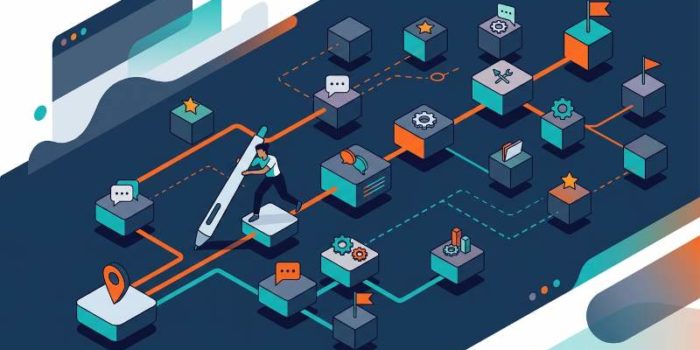
Training competency mapping precisely evaluates an employee's professional know-how and behaviors. It goes far beyond simply completing an e-learning module. Competency mapping structures the collection and analysis of decision-making data derived from interactive role-playing scenarios. This approach helps L&D departments objectively measure operational readiness, identify individual improvement areas, and demonstrate...
Traditional job interviews quickly show their limits when evaluating how a candidate actually handles stress or adapts to unexpected challenges. Face-to-face exchanges rely almost entirely on self-reporting, supported by rehearsed answers. HR decision-makers hear stories of past successes, yet legitimate doubts remain about how the individual will perform during a...
Skills mapping often remains an administrative snapshot. HR departments still rely heavily on self-declarations from annual reviews and completion rates from standard e-learning modules. This setup creates an operational disconnect from day-to-day work. The World Economic Forum's Future of Jobs Report (2023) points out that 44% of workers' core skills...
Designing interactive training programs requires staying closely aligned with day-to-day operational realities. After months of intensive production, instructional teams often launch a new course with high expectations. Yet initial feedback from subject matter experts is frequently critical: the training feels detached from real-world workflows, scenarios seem sanitized, and actual operational...
Most standard e-learning modules share a major flaw: they deliver purely sequential information. Employees mechanically click through successive screens, confined to the role of passive readers. In real workplace situations, handling complexity requires much more than theoretical memorization. Competence develops through active decision-making. Professionals must adapt to practical constraints, manage...
Measuring skill progression through LMS data requires analyzing intermediate learner decisions. Spot judgment errors and hesitation during practical exercises instead of settling for a final score or completion rate. Effective tracking demands a dedicated platform capable of tracing behavioral reasoning in realistic workplace scenarios. Learning data analysis involves systematically evaluating...
Effective factory safety training requires direct action. Operators must face the real hazards of their working environment. Interactive role-play scenarios replace static theoretical guidelines. Bespoke Serious Games design creates targeted digital learning paths where learners actively train against danger. They make critical decisions under pressure in real time. This approach...
A branching e-learning scenario refers to a non-linear pedagogical architecture. Each learner decision triggers a specific consequence. This choice alters the rest of the learning path. To structure these modules effectively, instructional designers rely on precise flowcharts built around four core design patterns: the funnel, the fan, the remediation loop,...
To reliably assess behavioral skills, instructional design must evaluate an employee's decisions within an exact workplace context. Theoretical questionnaires fall short here. The goal is to measure an employee's genuine ability to take action, interact, and solve problems under pressure. This evaluation goes far beyond simple knowledge recall. An employee...
Training departments invest heavily in digital modules. Yet the reality in the field remains stark. Faced with a screen, employees adopt a purely mechanical posture. They skim text, click rapidly just to move forward, guess the answers on the final quiz, and close their browser without retaining key principles. This...