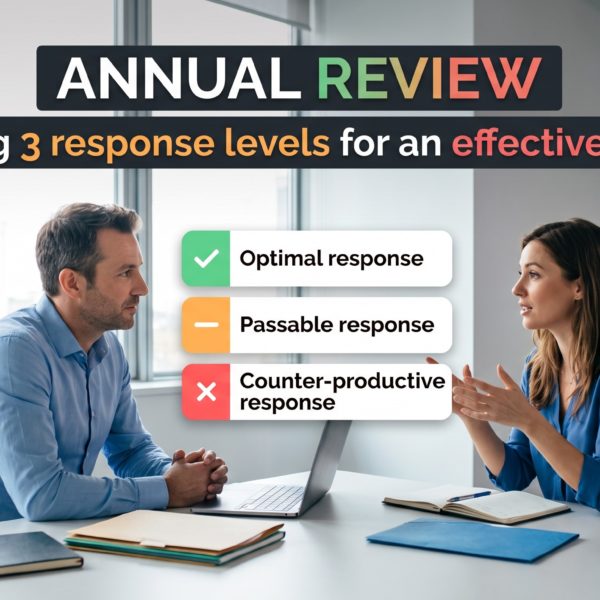

Training competency mapping precisely evaluates an employee's professional know-how and behaviors. It goes far beyond simply completing an e-learning module. Competency mapping structures the collection and analysis of decision-making data derived from interactive role-playing scenarios. This approach helps L&D departments objectively measure operational readiness, identify individual improvement areas, and demonstrate...
Traditional job interviews quickly show their limits when evaluating how a candidate actually handles stress or adapts to unexpected challenges. Face-to-face exchanges rely almost entirely on self-reporting, supported by rehearsed answers. HR decision-makers hear stories of past successes, yet legitimate doubts remain about how the individual will perform during a...
Skills mapping often remains an administrative snapshot. HR departments still rely heavily on self-declarations from annual reviews and completion rates from standard e-learning modules. This setup creates an operational disconnect from day-to-day work. The World Economic Forum's Future of Jobs Report (2023) points out that 44% of workers' core skills...
Measuring skill progression through LMS data requires analyzing intermediate learner decisions. Spot judgment errors and hesitation during practical exercises instead of settling for a final score or completion rate. Effective tracking demands a dedicated platform capable of tracing behavioral reasoning in realistic workplace scenarios. Learning data analysis involves systematically evaluating...
To reliably assess behavioral skills, instructional design must evaluate an employee's decisions within an exact workplace context. Theoretical questionnaires fall short here. The goal is to measure an employee's genuine ability to take action, interact, and solve problems under pressure. This evaluation goes far beyond simple knowledge recall. An employee...
An employee completes their e-learning path with a 100% score. The dashboard displays green indicators, confirming screen time and memorization of theoretical concepts. Yet, the very next day, this same employee faces an angry customer or must manage an intense team conflict. In both cases, they make the wrong call....
A new regulation to master quickly. A critical digital tool to implement immediately. Customers demanding unprecedented responsiveness. In business, the required skills evolve at a constant pace. The problem? Training too often lags behind. For many HR or L&D decision-makers, the equation is frustrating: traditional offerings create a gap with...
A 92% e-learning completion rate on your latest compliance module. On paper, it looks perfect. HR indicators are green, management is smiling, and you tick the regulatory box with relief. Except that the next day, on the ground, nothing changes. The same safety mistakes happen on the workshop floor, and...
VTS Editor: When Skills Take Root, Field Impact Becomes Evident Today, theoretical knowledge alone won't cut it for your teams. The demand is clear: act, perform, and do it fast on the ground. L&D and HR leaders see it daily: classic, often informational, digital learning struggles to bridge this gap....
Our Training and L&D departments invest heavily in digital learning. Yet, despite extensive module catalogs, practical skills on the ground often fail to stick. This gap between theoretical knowledge and concrete know-how is costly for businesses. Knowledge doesn't magically translate into action. A salesperson doesn't become seasoned just by reading...