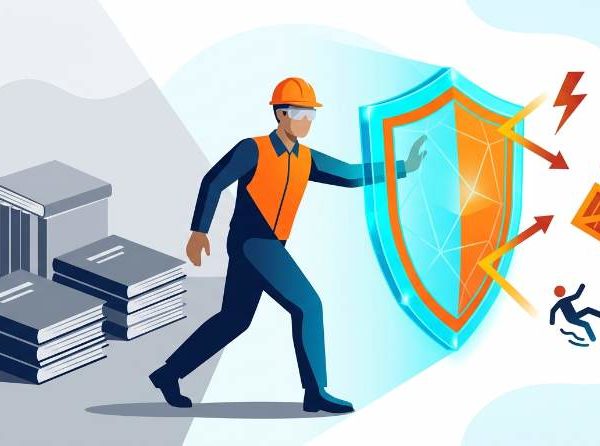
The pattern on the ground is all too familiar: a module shows a 100% completion rate, the employee has watched every video, clicked through every slide, and scored the bare minimum on the final quiz. On paper, the training is validated. Yet, the operational reality tells a completely different story. Completing a traditional course rarely guarantees actual skill acquisition. Under the pressure of their daily routine, employees struggle to apply these new concepts effectively.
The core issue lies in the instructional design. Traditional formats deliver information top-down, without ever training the learner to actively apply that knowledge. Picture a highly frustrated customer, a critical industrial safety procedure, or a tough sales negotiation. Memorized theory evaporates instantly. The employee hesitates, misapplies the guidelines, and naturally slips back into old work habits. The digital module distributed knowledge, but actual capability is sorely lacking. To engage your e-learning learners, you must replace passive slide-viewing with genuine situational training that welcomes the right to make mistakes.
This disconnect leads to massive dropouts. Learners tire of strictly linear formats where their only action is clicking through text. This monotony drains attention and leads to a costly drop in engagement. The return on investment for these programs plummets, as L&D budgets end up funding hours of passive screen-time. Organizations need a training model that confronts users with real-world operational challenges. Overcoming this hurdle requires a robust tool capable of running interactive scenarios and turning static content into behavioral practice grounds.
How to effectively restructure your digital learning approaches?
Given the failure of passive formats, the priority is to dissect current structural roadblocks and restructure your learning paths. HR leaders are well aware of the issues surrounding top-down information overload and the lack of decision-making opportunities for users. Cognitive retention is simple: learners retain information when they are continuously challenged within a simulated, highly credible professional environment.
Lasting skill acquisition requires specific cognitive mechanisms based on trial and repetition. Users must analyze the immediate consequences of their operational choices. By using branching scenarios and animated characters with realistic emotions, modules can faithfully replicate the tension of a difficult performance review or the urgency of an on-site safety incident. The learner stops being a spectator and becomes the main driver of their own progress. They analyze the situation, formulate a response to their virtual counterpart, and correct their mistakes in a safe digital environment. This active immersion dramatically improves knowledge retention.
Designing these immersive modules is often wrongly perceived as a time-consuming task requiring advanced coding skills. Using a professional authoring tool like VTS Editor makes it easy to industrialize this production. Instructional designers build complex scenarios via a visual drag-and-drop interface. This autonomy allows teams to quickly align visual contexts with industry realities, ensuring a smooth design process and compatibility with all LMS platforms.
Why does passivity severely limit the effectiveness of digital modules?
Corporate training observations reveal a persistent trend: “next-click syndrome.” The traditional model relies on a succession of text-heavy slides ending with a basic multiple-choice quiz. This format requires minimal cognitive effort. By passively reading instructions, learners do not actively solve problems, evaluate options, or build hypotheses. Consequently, attention spans plummet within minutes. The information is stored in short-term memory just long enough to pass the test, then vanishes almost immediately once the employee returns to work.
Passing a multiple-choice quiz proves temporary recall, but it doesn’t demonstrate usable, real-world skills. A study by Traci Sitzmann (2011) on interactive simulations confirms this: active learning increases knowledge retention by 9% and practical application by 14% compared to passive methods. In their daily work, employees don’t check boxes. They navigate nuanced human situations, interpret subtle behavioral cues, and live with the consequences of their choices. This disconnect creates a false illusion of competence within the organization.
To break this cycle, action must be brought back to the core of the training. The module must force learners to use their judgment from the very first seconds. This is where concrete behavioral practice comes into play. Designers must move away from static slides to integrate real-life scenarios, mini-games, branching dialogues, and interactive choices. The employee practices in a safe virtual environment where building the right reflexes replaces passive reading.
The disconnect from operational realities: the primary cause of dropout
Generic content is a major barrier to engagement. Presenting abstract rules that could apply to any company instantly demotivates learners. Without clear context, the human brain struggles to retain information that seems disconnected from daily realities. A manager dealing with team conflict wants to practice handling an employee’s frustration in a familiar setting, not reread academic definitions of leadership.
Similarly, generic safety training on a factory floor is ineffective if it doesn’t showcase the actual machinery operators handle daily. Training is then dismissed as a waste of time, causing motivation to crash and skills transfer to drop to zero. Training must reflect the team’s actual workspace and everyday tools.
Visual contextualization is essential. Designers must align the virtual environment with the company’s real-world settings: importing 2D backgrounds, using immersive 360-degree environments, or modeling specific spaces like hospital rooms, retail shops, or warehouses. Adding customized animated characters (with realistic body types, civilian clothes, or work uniforms) makes the virtual interaction believable. This immediate visual familiarity validates the training and keeps cognitive engagement high.
What is the central role of interactive scenarios in learning?
A familiar environment isn’t enough to build skills if the learner remains a passive observer. The module must force them to act when faced with a problem and live with the outcome of their decisions. Immersing employees in branching scenarios breaks away from linear learning. The user assesses the context, reads interpersonal dynamics, and responds to a realistic avatar whose emotions change in real time. The outcome depends entirely on their conversational choices.
Fear of failure often blocks skill development. This fear is justified in business, where mistakes harm productivity or customer relationships. Branching scenarios provide a safe practice space. In this virtual environment, learners have a fundamental right to fail, explore poor strategies, and witness the immediate fallout. If an employee communicates aggressively, the avatar displays frustration or anger, showing the impact of that behavior in a safe, risk-free setting.
Learning through mistakes is far more memorable than reading a block of text. Users adjust their behavior based on emotional feedback and rerun the simulation until they master the correct operational skill. The brain logs this as a real lived experience, deeply anchoring the professional reflexes needed for high job performance.
How to integrate genuinely relevant gamification mechanics?
I frequently see organizations mistake gamification for cosmetic packaging, hoping to win over professionals by pasting a virtual trophy onto a dull multiple-choice quiz. Employees quickly spot this surface-level attempt and reject games that have nothing to do with their actual jobs. Genuine educational gamification relies on a challenging progression system tied directly to the gradual mastery of targeted skills.
A smooth difficulty curve pushes learners to apply newly acquired knowledge to resolve increasingly complex challenges. Every decision triggers a tangible reaction. If a poor negotiation strategy loses a deal, the virtual client ends the meeting and walks out. The lesson is learned far more effectively than through a simple red “incorrect” screen.
Giving out badges or trophies shouldn’t merely reward attendance. They must validate the completion of a tough, concrete challenge, like successfully de-escalating a high-tension meeting. This scoring system drives self-improvement and encourages users to replay the scenario voluntarily to beat their score, naturally reinforcing their reflexes.
How to bypass the technology barrier in e-learning design?
Designing serious games often scares decision-makers due to perceived technical limitations. Companies assume they need massive budgets and months of custom software development to build branching scenarios. Pressured by deadlines, they fall back on slide-based formats that are cheap in the short term but useless for actual learning, dismissing decision-making practice as an unaffordable luxury. Designers hold back their creativity and sacrifice engagement to meet tight schedules.
Scaling digital learning requires separating educational sophistication from technical complexity. The goal is to let subject matter experts focus on building accurate practice scenarios without worrying about code. A powerful, intuitive interface based on simple drag-and-drop building blocks dramatically simplifies the creation of complex dialogues. Animating a 3D character in a realistic setting becomes a fluid, fast, and highly rewarding process.
This technical autonomy also makes it easy to manage accessibility (dyslexia, color blindness, low vision) to ensure a consistent experience for everyone. By keeping creation in-house, organizations save significantly, slash outsourcing costs, and accelerate their training rollout timelines.
Why keep design in-house with a specialized authoring tool?
Once outsourced to expensive external agencies, design power is moving back into the hands of instructional designers. Working with a clean visual editor, creators can visually map out the consequences of every decision. Instead of wrestling with complex coding variables, they focus on the human element: modeling operational crises, adjusting character behaviors in real-time, and adding context-specific scenes based on industry updates.
Integrating artificial intelligence into the scenario design process boosts both creativity and operational speed. The automated generator uses your learning objectives to instantly propose a coherent outline that serves as a narrative foundation. While AI speeds up production, human expertise guarantees final educational quality by refining dialogue and validating real-world accuracy.
Rollout is instant. SCORM export ensures complete compatibility with any LMS on the market. Skills progression is tracked via analytics tools, allowing trainers to continuously measure module effectiveness, spot areas for improvement, and track individual progress.
Behavioral practice to validate skills acquisition
Scaling production is pointless if the final training fails to keep learners engaged. Users should never validate their attendance by mindlessly clicking “next.” Learners must face realistic situations that simulate daily job pressures, where taking responsibility for their choices drives the learning. This shift transforms their mindset: they actively practice the precise professional behaviors needed in the field.
This shift toward behavioral training requires a high-performance platform capable of capturing data to measure actual progress. HR departments no longer gauge success by superficial completion rates, but by the team’s ability to use acquired reflexes on the job. High interactivity keeps concentration levels peaked and slashes dropouts in digital learning. Training validates skill acquisition before employees face real-world risks.
Deploying interactive learning requires software solutions that combine deep functionality, operational relevance, and speed. Serious Factory supports organizations across the entire digital learning value chain, from design to tracking. To see how your static content can be turned into immersive experiences and to evaluate our approach’s ROI, feel free to request a demonstration of Virtual Training Suite.
Frequently asked questions about e-learning engagement
What is an interactive, gamified e-learning module?
An interactive, gamified e-learning module places the learner at the center of a realistic professional scenario. Instead of passive reading, the user analyzes the situation and makes critical decisions. They interact with virtual characters, earn points, and immediately observe the impact of their choices. This method guarantees concrete skill acquisition and lasting retention, keeping e-learning learners highly engaged.
How can you measure learner engagement in a concrete way?
Engagement goes far beyond the completion rate of a linear slide-deck. With a specialized platform like VTS Perform, L&D managers can track user behavior, analyze decision paths in complex branching scenarios, monitor attempts, and assess score improvement. This concrete data shows the actual cognitive involvement of every employee.
Are coding skills required to create serious games?
No, adopting a professional authoring software like VTS Editor completely removes the need for coding. Instructional designers use a visual editor based on a simple drag-and-drop system. They can design complex decision trees, integrate settings, animate avatars, and set up reward systems in total autonomy.
Is gamification suitable for professional adult training?
Yes, provided you avoid surface-level gamification. For working professionals, the game mechanics must offer a genuine challenge tied to their actual duties—such as leading a difficult performance conversation or securing a production line. Earning tangible rewards validates their cognitive effort, drives self-improvement, and justifies the educational value of the training.