


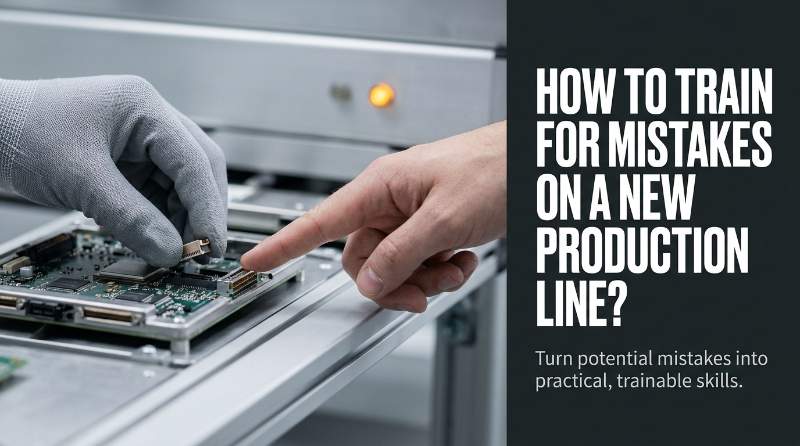
The Hidden Risk of a New Production Line: Human Error
Custom serious game design provides a practical strategy to prepare operational teams for a new production line. This training approach lets technicians practice handling breakdowns and critical incidents in a secure setting, without interrupting real production schedules. It ensures rapid skills development and prevents costly errors right from launch day.
Installing a new production line represents a major capital investment, often running into millions of euros. Yet the primary operational risk does not stem from the hardware itself. It surfaces during the first weeks of operation, which are consistently critical. That is when theoretical machine output collides with plant-floor reality and the true proficiency of operating teams.
Equipment profitability depends directly on how effectively technicians handle unexpected line events. The challenge goes beyond following standard operating procedures under normal conditions. Plant managers must ensure that every operator reacts correctly and promptly to an alarm or malfunction. Hesitation directly cuts into output, and unplanned downtime on a brand-new line eats straight into asset depreciation schedules.
However, training staff directly on an active line ties up valuable equipment. In practice, this slows down ramp-up times. It also exposes expensive machinery to handling mistakes that can prove costly or hazardous. The strategic challenge is clear: how can teams develop solid reflexes before commissioning begins, learning to handle anomalies without halting production or risking equipment?
The Gap Between Technical Documentation and Shop-Floor Reality
Work instructions and technical manuals form the foundation of technical onboarding. They document operating procedures, maintenance sequences, and plant safety standards. These materials describe nominal operation on the production line, portraying an ideal setup where every process step runs smoothly.
Yet this procedural view does not prepare technicians for high-pressure plant environments. The sounding of an alarm coupled with downtime costs creates real stress. No documentation can prepare an operator for that mental load. The critical capability is not merely knowing the standard procedure, but applying it steadily under degraded operating conditions.
Furthermore, technical documentation lists potential breakdowns without providing diagnostic practice. It states symptoms and fault codes, but cannot replace the analytical process needed to trace a complex root cause. On the line, an operator must cross-reference data points, eliminate false leads, and decide on corrective action within minutes. That diagnostic agility does not come from passive reading. Edgar Dale’s Cone of Experience demonstrated this principle clearly: learners retain up to 90% of what they practice directly, compared to roughly 10% of what they read.
Theoretical knowledge falls short the moment an unexpected stoppage occurs. Knowing what to do on paper is very different from executing it smoothly under time constraints. This fundamental gap slows ramp-up and exposes plants to avoidable downtime.
Why Practicing Critical Failures on the Live Line Is Impractical
A natural question arises: why not train operators directly on the new machinery? The barrier is strictly economic and practical. Purposely triggering major faults on new equipment makes no operational sense. Every minute of lost production represents an immediate financial loss, well before reaching target output.
The priority is maximizing plant uptime from the start. Taking machinery offline for training ties up valuable assets with uncertain learning gains. Restarting a complex line is rarely immediate; it demands calibration checks, flushes, and adjustments that stretch line stoppage times.
Beyond capital costs, worker safety remains paramount. Deliberately inducing a severe failure, even under supervision, creates physical hazards. Handling energized parts or high-pressure circuits carries genuine risk, and plants cannot justify compromising team safety for training purposes.
Physical machinery integrity is also at stake. Subjecting new assets to abnormal operational stress risks secondary component damage or chain-reaction failures. Industrial operations face a clear dilemma: operators must be trained for critical incidents, yet the active production line cannot serve as a training ground. This is where custom serious game design bridges the gap, recreating real-world faults, time pressures, and production decisions in a risk-free framework without impacting actual operations.
The Challenge of Objectively Validating Operator Readiness
Beyond initial training, verification remains difficult. How can production managers confirm that an operator has internalized correct procedures? Theoretical understanding of a work instruction does not ensure reliable execution when an alarm sounds on the floor and time is running out.
Standard quizzes measure memorization rather than hands-on ability. They cannot validate operational reflexes under stress. An employee might achieve a high score on a written assessment, yet hesitate, select the incorrect isolation valve, or cause an escalation at the physical machine. Relying purely on supervisor observation is subjective and hard to scale across shifts.
This uncertainty represents a tangible operational liability. Authorizing production runs without validating hands-on skills invites expensive plant stoppages. The objective is not checking whether guidelines were read, but verifying that correct steps will be taken instantly when an issue arises.
Validating readiness requires observing operators in action across realistic scenarios. A custom serious game tracks what operators actually do rather than what they recall. Every decision, control adjustment, and response interval is recorded and analyzed, delivering factual evidence of operational capability.
Translating Standard Procedures into Decision Trees
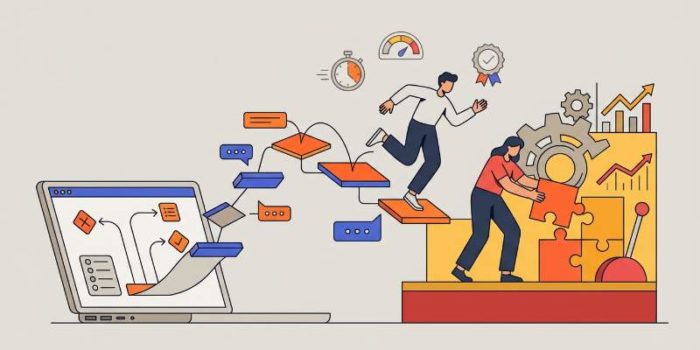
Every training project begins with existing technical manuals. Yet a static standard operating procedure simply describes ideal linear execution; it does not address operational doubt or unexpected line events. Instructional engineering deconstructs these linear steps into interactive, scenario-driven choices.
Our instructional designers evaluate each critical process milestone. For every stage, we pinpoint the critical actions an operator must execute and examine failure points: “What happens if this step is missed?” We map common, costly operator mistakes. Each technical procedure becomes a series of consequential choices. For instance, when an alert sounds, does the technician isolate the feed first or notify line supervision?
These structured decision trees form the core architecture of each module. Every path reflects a concrete consequence of the learner’s decision. Correct choices advance the workflow; incorrect decisions trigger realistic operational fallout, such as an automatic line stop, followed by contextual feedback. This pedagogical scripting sits at the heart of our custom serious game design practice.
Static documentation transforms into an engaging, practical learning tool. Operators stop passively reviewing technical procedures and start practicing real-time decision-making in plant-specific scenarios. They build reliable operational reflexes that translate directly to line performance.
Building Training Scenarios from Your Plant Floor Operations
The business value of a serious game depends on how closely it mirrors plant operations. A collaborative design approach ensures that specific machinery, interfaces, and operational procedures are faithfully represented, giving technicians a safe environment to practice, make mistakes, and build capability.
Mapping Equipment Faults and Production Outcomes
Building reliable reflexes requires confronting technicians with realistic floor scenarios. Working directly with your plant engineers and technical leads, we catalog high-impact anomalies, such as sensor failures, material jams, or pressure drops. Each issue forms the baseline of an interactive scenario.
Every operational choice leads to a distinct outcome. If a technician overlooks a thermal alert, the module reflects that failure through human-machine interface (HMI) indicators, acoustic alerts, and machine state changes. The end result could be an emergency trip or product quality defects. The operator directly links their decision to its tangible impact on production.
Time management and passive delays are also incorporated. In plant operations, failing to act is a choice. Scenarios progress dynamically if an operator delays critical actions, compounding the equipment fault. This controlled pressure develops the composure and prompt decision-making required on active lines.
This operational realism distinguishes our custom serious game design projects. Rather than running generic quizzes, we create learning environments where operational decisions carry realistic weight. Technicians do not just read protocols; they understand the downstream impact of every action.
Establishing Objective Performance Metrics for Every Technical Skill
Passing or failing a scenario provides insufficient operational insight. Training evaluation must deliver granular data on technical mastery. By linking specific key performance indicators (KPIs) to each operator action, training modules function as diagnostic tools.
Evaluation goes well beyond final completion. Adhering to the exact sequence of technical steps is vital, as swapping two operations on real hardware can trigger machine damage. The system tracks the exact order of steps taken by each learner.
Diagnostic speed is another critical metric. The platform clocks the duration between an alarm triggering and the correct issue identification. This highlights not just whether the technician solved the issue, but how quickly they diagnosed the root cause, distinguishing hesitant operators from proficient technicians.
Safety compliance remains non-negotiable. Lockout/tagout (LOTO) protocols and PPE selection are tracked individually. Other metrics track resource efficiency, such as selecting appropriate tools for specific line interventions. This precise data trail is a major benefit of custom serious game design, giving managers documented proof of employee capability.
Anchoring Technical Skills Through Collaborative Co-Design
An effective industrial serious game cannot be designed in isolation. It must be built around your operating environment. Our process relies on close collaboration with your process specialists, maintenance supervisors, and production managers through focused design workshops.
The goal is to translate standard operating instructions into effective learning paths while capturing real-world operational nuances: specific manual handling, physical equipment constraints, and common shift-handover issues. These workshops produce a structured instructional design document detailing learning milestones and scenario mechanics.
Your technical expertise is structured into interactive decision scenarios. Each procedural step becomes an active decision point. Operators are not reading instructions; they are applying them within realistic constraints, experiencing the operational results of each choice.
The resulting tool uses your plant’s terminology and mirrors your floor conditions. Because technicians recognize their day-to-day equipment, adoption is immediate. This co-design method ensures the finished module acts as an operational training tool aligned with your plant’s output targets.
Interactive Scenarios: Safe Practice for Technical Teams
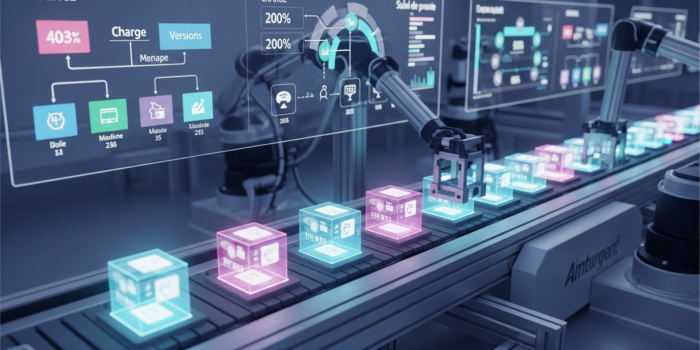
This digital framework serves as an operational replica of your new production line. Technicians take control of virtual workstations replicating physical machine layouts and control interfaces. Training takes place in a familiar visual setting, speeding up skill adoption.
A crucial advantage is the complete freedom to make mistakes safely. Technicians can misread an indicator or select the wrong valve without risking equipment damage, scrap production, or plant downtime. Removing the fear of negative consequences creates the psychological safety required for deep learning.
Every error triggers instant, contextual feedback. The program explains why a specific decision caused an issue and points the operator toward the correct operational procedure. Mistakes become productive learning moments. Hermann Ebbinghaus showed with the forgetting curve that active recall and practical application are essential to retain correct practices over time.
Technicians can repeat complex procedures as often as needed until their responses become second nature. This is the primary objective of a custom serious game: turning technical procedures into dependable habits. Operators gain practical confidence long before handling live equipment.
Evaluating Technical Proficiency Prior to Commissioning
Each training run produces concrete operational analytics. The platform logs choices made, reaction times, and chosen diagnostic paths. Rather than providing a basic completion percentage, it maps out the technician’s actual decision process.
These analytics feed into actionable management dashboards. Training directors and plant managers can verify which procedures are thoroughly mastered and which require further practice. Concrete operational metrics replace subjective feedback with verified performance data.
Granular reporting also pinpoints recurring procedural difficulties across teams. If multiple operators fail the same isolation sequence, it flags a documentation ambiguity or a broader training need. Supervisors can conduct targeted debriefs or provide individual coaching to address specific skill gaps.
Operations teams can confirm consistent technical readiness across all shifts before commissioning begins. Access to the live machinery can even be linked to completing these critical operational exercises. This de-risks ramp-up, cuts down human errors, and supports a seamless production startup.
Securing Day-One Operational Performance
Training industrial teams must go beyond distributing technical documentation. It must ensure that every operator performs effectively the moment machinery goes live. A technical manual cannot reproduce floor pressure or operational complexity. Verified readiness is critical to safeguarding new line investments.
Translating plant processes into interactive training environments does more than educate your workforce; it validates their ability to execute under real operating constraints. This direct practice reduces commissioning errors and prevents costly downtime. Technicians test their knowledge and resolve uncertainties before handling live equipment.
This is the core objective of our custom serious game design solutions. We look beyond static digitizations of work instructions, building decision-led modules that replicate realistic outcomes and deliver targeted instructional feedback. Training becomes a reliable assessment of operational proficiency.
Capital investments in new production hardware are reinforced by an operational investment in team capability. Rather than hoping theoretical training translates to the shop floor, managers can structure, monitor, and verify skills development. Teams are genuinely prepared to maintain productivity, speeding up project return on investment.
Transition from Traditional Instruction to Operational Readiness
The success of your new production line relies heavily on the technicians operating it. Every operational mistake directly affects plant productivity, line cadence, and quality yields. Training programs must demonstrably prepare teams for real plant-floor demands.
We invite you to look beyond standard product demonstrations. Let us examine your operating procedures and the critical failure risks on your upcoming line. Together, we can outline the core technical competencies required and identify how targeted practice modules can secure your production launch.
During this initial review, our team evaluates instructional feasibility and identifies 3 to 5 high-risk operational scenarios where interactive training delivers the strongest return. You will gain a clear outline of how an interactive module functions and the measurable benefits it brings to your plant.
To turn these objectives into an actionable plan, schedule a technical scoping workshop with our team. Our specialists will help you map out a tailored training structure based on your plant requirements, ensuring production performance from day one.
Frequently Asked Questions About Industrial Serious Games
What is a serious game in industrial training?
An industrial serious game is an interactive digital training tool. It uses structured game mechanics to train staff on standard procedures, maintenance workflows, and plant troubleshooting. By recreating actual working environments safely, it enables technicians to practice machinery operations and emergency responses without physical danger or production risks.
Can a custom serious game be updated as processes evolve?
Yes. Custom projects are built using our professional authoring software VTS Editor. This enables your teams to update scenario logic, adjust standard procedures, or add new equipment failure paths independently over time.
What is the return on investment (ROI) of a serious game on a production line?
ROI is measured by tangible drops in human-error costs: reduced unplanned downtime, faster line ramp-ups, and fewer quality rejections. It also reduces safety incidents on the plant floor, avoiding associated disruption and equipment repair costs.