Why Behavioral Simulations Are Transforming Management Training In many companies, management training is still very traditional: in-person training days with an instructor, linear e-learning modules, inspiring videos, reading about concepts. All useful formats for conveying models and tools, but they often struggle to deeply transform managers’ behaviors. However, management behavioral...
Immersive Scenarios in E‑Learning: 7 Unexpected Benefits Most training managers, instructional designers, and HR managers today share the same observation: linear e‑learning modules, even well designed, quickly reach their limits when it comes to changing behaviors in the field. Learners “take” the modules, “pass” the quizzes, but the right reflexes...
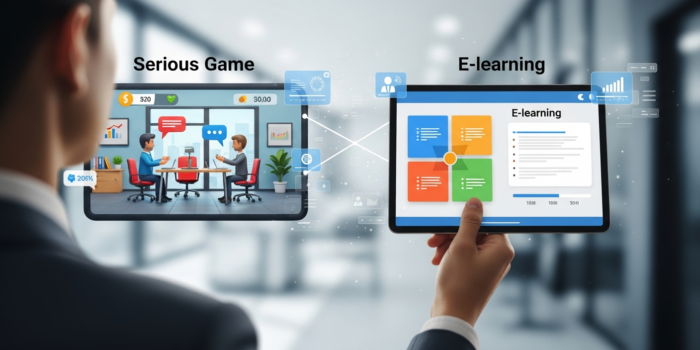
Serious Game or E-Learning: A Strategic Choice, Not Just a Technological One For a training manager, an HR manager, or an instructional designer, the real challenge today is no longer to "go digital." It’s choosing, from the multitude of available formats, those that will actually deliver a measurable impact on...
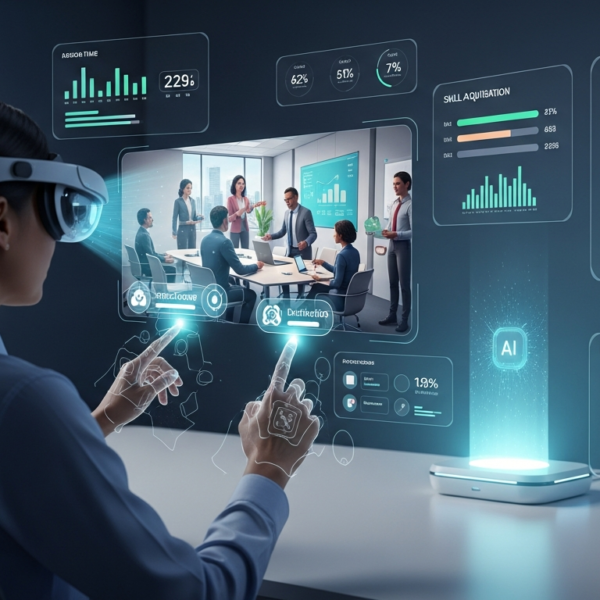
Training managers, instructional designers, and HR directors are all hearing the same message: “AI is going to revolutionize training.” In reality, what the market often offers are mainly tools to produce the same thing faster: generate a quiz in one click, summarize a PDF, produce an automatic voice-over, or translate...
Create an Interactive Presentation with VTS Editor: Why and For Whom Definition and Benefits For a training manager, instructional designer, or HR director, the question is no longer “should we energize our materials?” but rather “how can we do it quickly, effectively, and measurably?”. An interactive VTS Editor presentation is...
Create Effective Role-Playing Scenarios for Your Training Modules Why do some simulations genuinely change behaviors, while others merely feel like dressed-up quizzes? Because a great role-playing scenario places the learner in realistic decision-making situations, shows the consequences of their choices immediately, and aligns with the business objective. As a training...
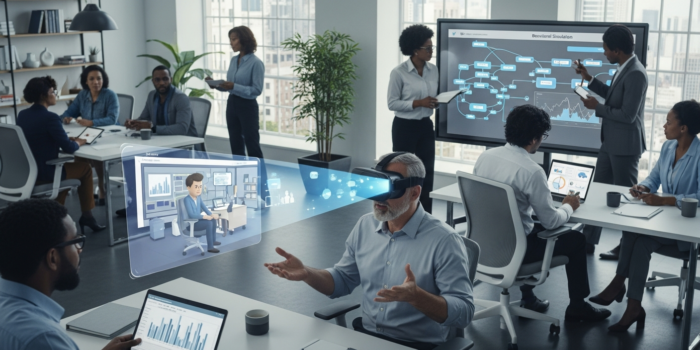
E-Learning Scenario-Based Tools: Why They Make a Difference If you're a training manager, instructional designer, or HR professional, you share a common goal: driving behavior change in the field. Branching scenarios, realistic simulations, serious games, and 360°/VR environments turn learners into active participants. They act, choose, see the consequences, and...
The 7 Key Benefits of Role-Playing Scenarios for Corporate Learning Training managers, instructional designers, HR professionals: if you're looking for methods that truly transform on-the-job behaviors, corporate training role-playing scenarios are a decisive lever. They shift your employees from a passive exposure stance (slides, webinars, videos) to active participation in...
E-learning Role Play: Definition, Stakes, and Educational Value For a training manager, instructional designer, or HR director, the question is no longer “Should training be digitized?” but “How can training be made effective, engaging, and applicable on the job?” E-learning role plays address this very issue. They are interactive, believable...
Gamification in E-Learning and Learner Motivation: Definition, Benefits, and Evidence For a training manager, instructional designer, or HR professional, the question is no longer whether gamification works, but how to apply it methodically to accelerate skill acquisition. Gamifying e-learning to motivate learners means incorporating game-inspired mechanics (points, badges, challenges, levels,...